AI-Powered Traffic Sign Recognition Platform
Rieker Signs
About the project
Rieker Signs is an AI-powered traffic sign recognition platform designed to detect and analyze roadway signs from captured video data.
Want to discuss your project with our team?
Book a callAI/ML-powered sign detection platform.
The system combines computer vision, machine learning, cloud infrastructure, and mobile technology to transform roadway imagery into structured sign information.
Technology
- React Native
- Node.js
- Python
- MongoDB
- Kubernetes
- GCP
- YOLOv8
- Gemini Vertex AI
AI & Computer Vision
A YOLOv8-based object detection pipeline was developed for traffic sign recognition. Video data was processed through frame extraction and detection workflows, with detected information and associated metadata recorded for downstream analysis.
An automated labelling pipeline was also developed to accelerate dataset preparation and model training.
Modern Cloud Architecture
The legacy monolithic architecture was migrated toward a modular microservices architecture separating major functions such as authentication, media processing, and machine learning services.
The platform was deployed using Kubernetes and cloud infrastructure on Google Cloud Platform.
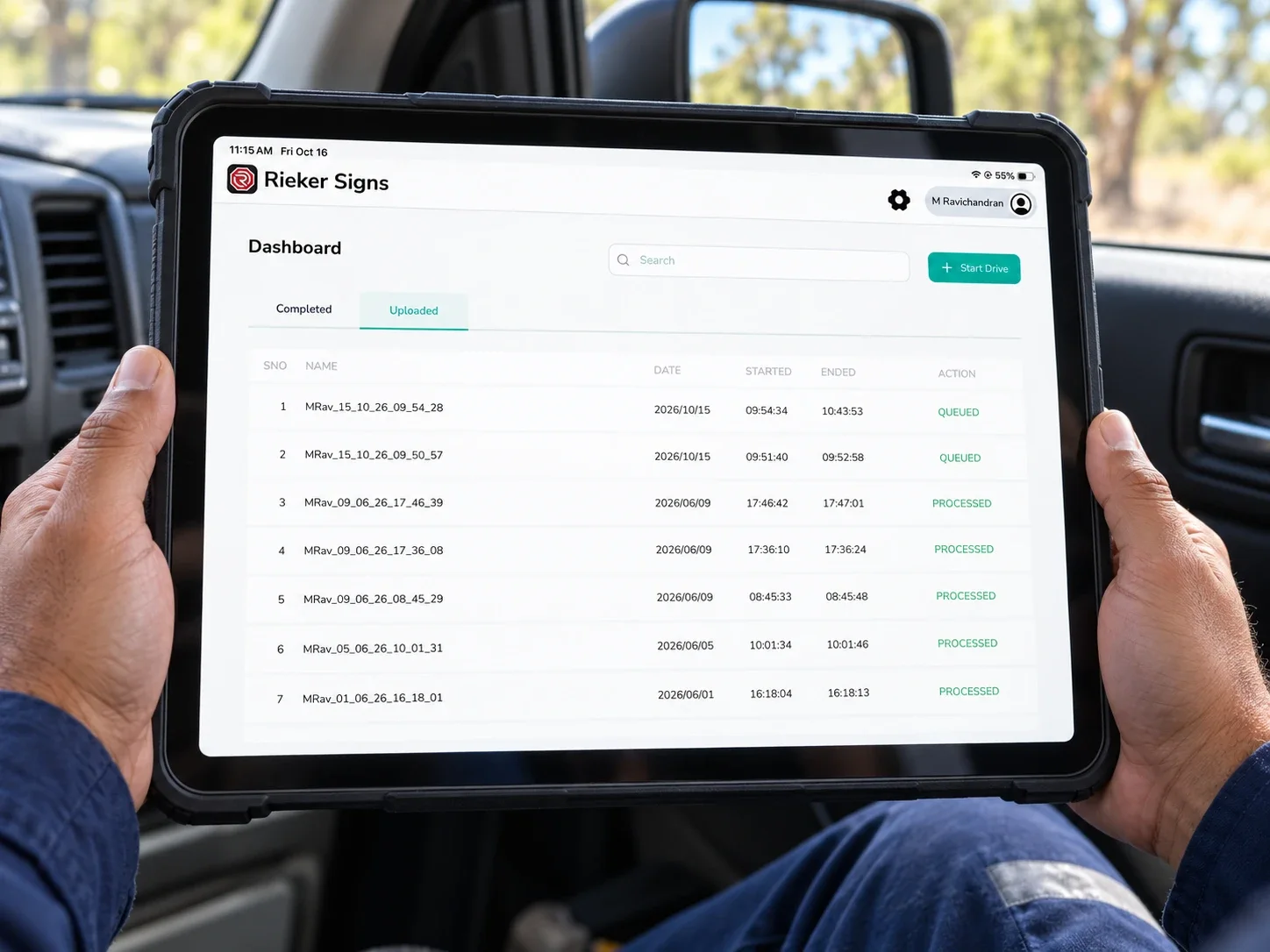
Every drive, in one list.
The dashboard lists each drive with its date, start and end time, and its status: Queued or Processed.
Drives can be searched, and a new one starts from a single button.
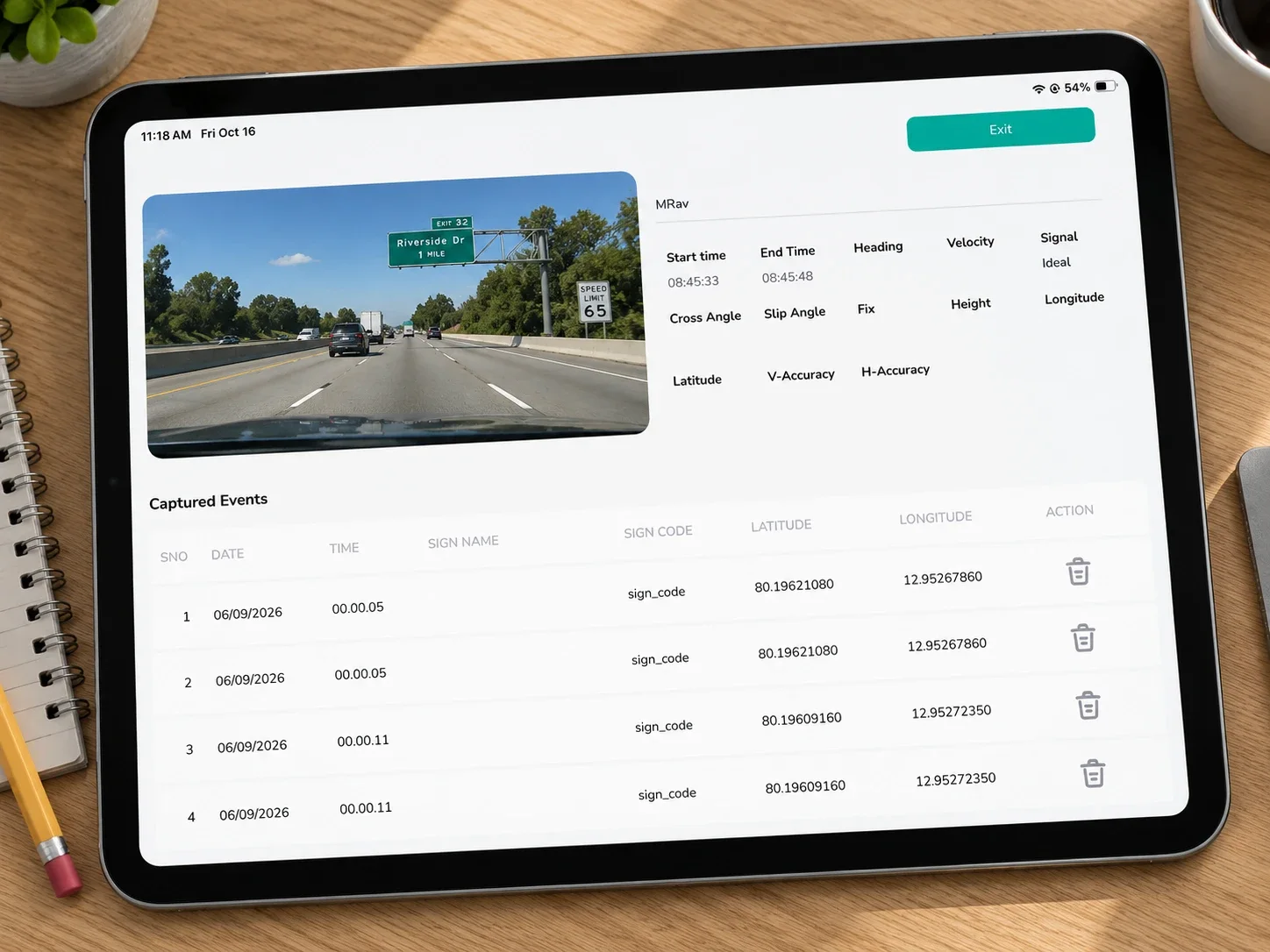
Each sign, with its location.
Captured events list the date, time, sign code, latitude and longitude of every sign the app has picked out, and each can be removed with a tap.
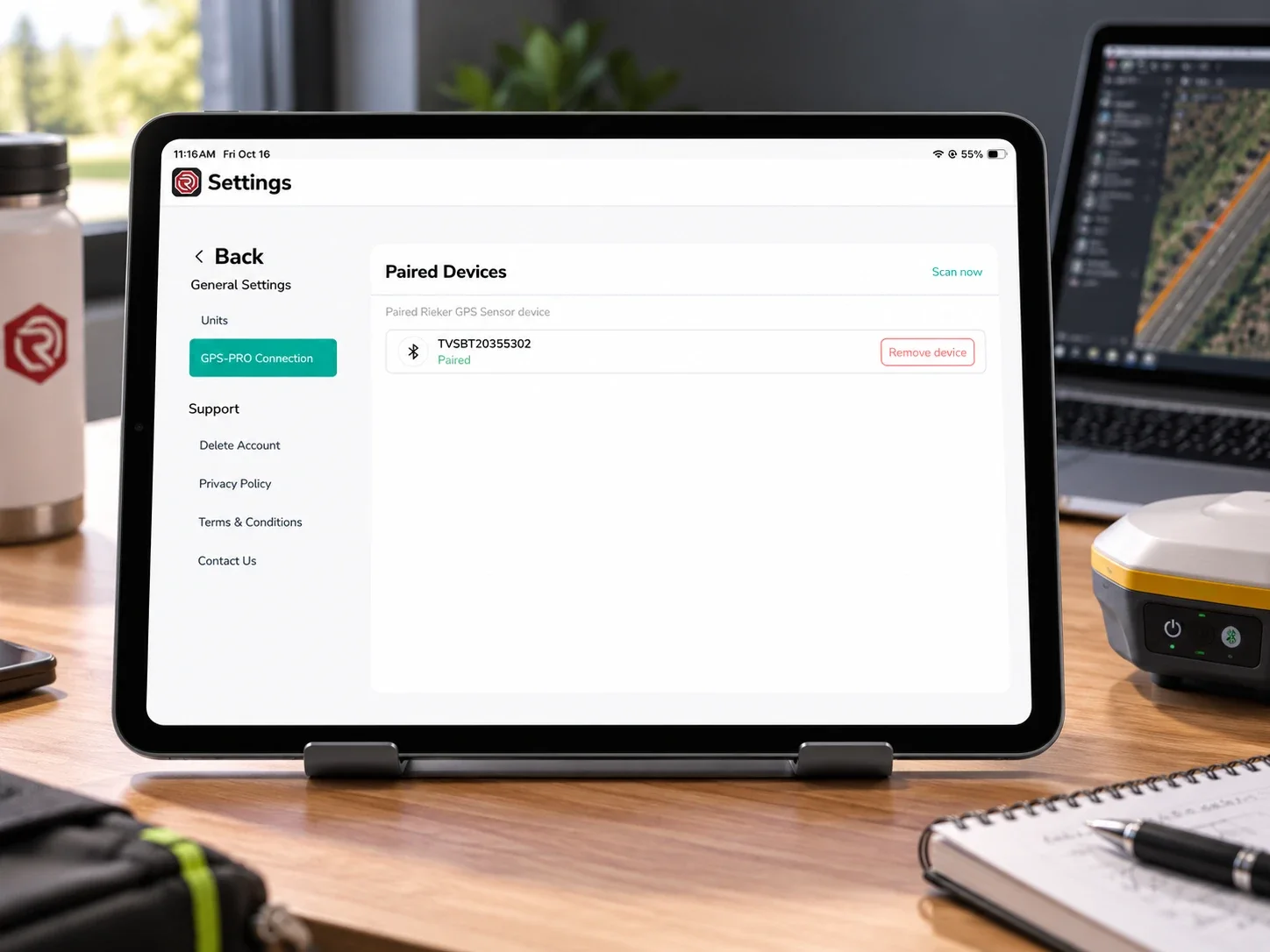
Paired to the sensor.
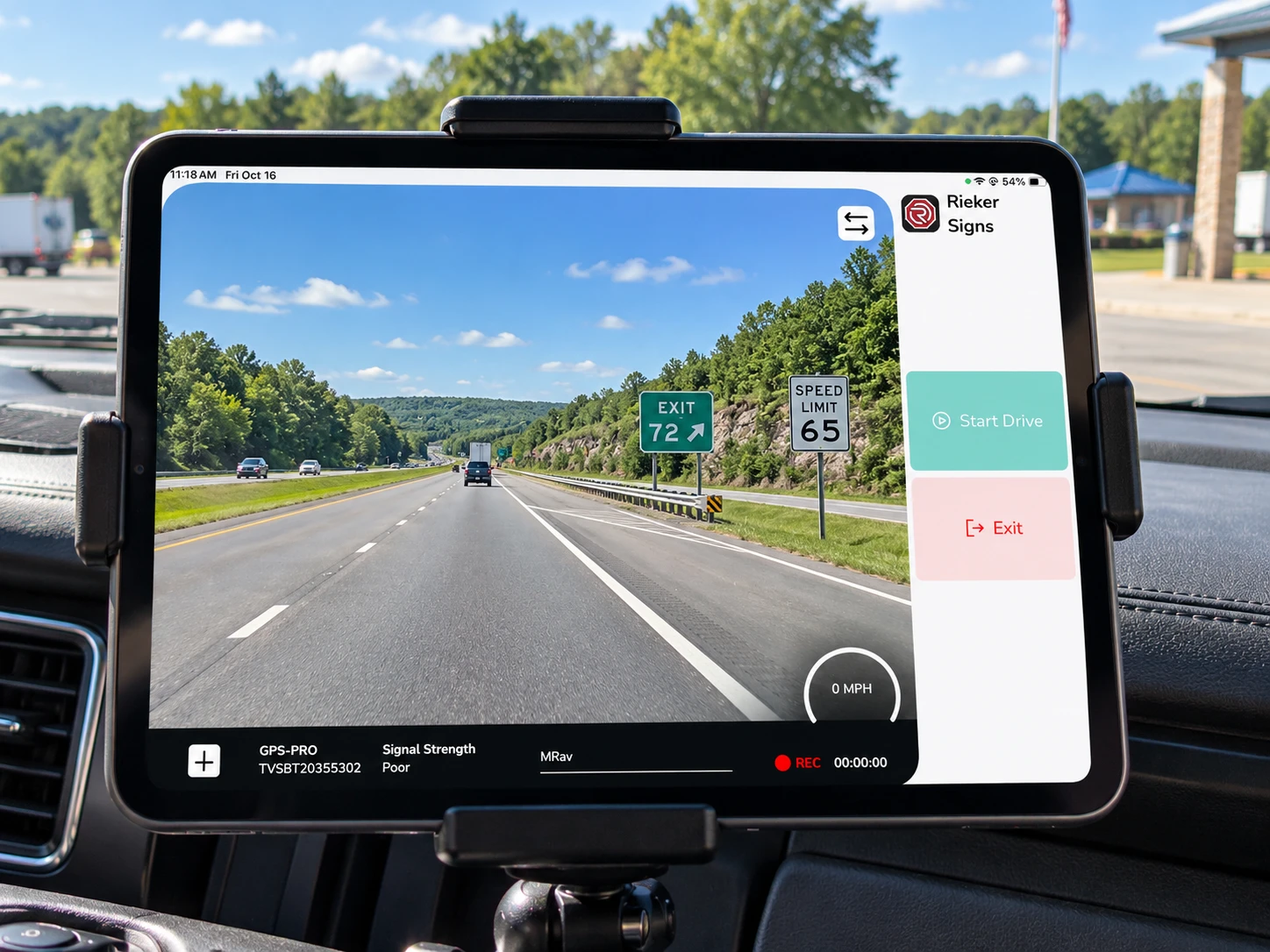
The GPS-PRO sensor connects over Bluetooth. From settings the driver can scan for the device, see it as paired, and remove it when needed.
How we optimised it.
- 01
An automated labelling pipeline speeds up dataset preparation and model training.
- 02
The monolith was split into separate services for authentication, media processing and machine learning.
- 03
Gemini on Vertex AI enriches detected signs with extra data.
Roadway video turned into structured sign information, on a modular platform running on Kubernetes and Google Cloud.
What it can do.
- AI-powered traffic sign detection
- YOLOv8 computer vision model
- Automated dataset labelling
- Video frame extraction
- Detection and metadata logging
- Modular microservices architecture
- Kubernetes deployment
- Cloud-based ML processing
- Gemini Vertex AI integration
- AI-assisted sign data enrichment
Every layer, one team.
We served as technical architect and ML integrator, responsible for the architectural transformation, computer vision pipeline, model integration, cloud deployment, and AI enrichment workflows.
- UI/UXUser experience and interface design
- ArchitectureMonolith to microservices
- AI / MLYOLOv8 detection, auto-labelling
- MobileReact Native app
- BackendNode.js and Python services
- CloudKubernetes on Google Cloud
- AI enrichmentGemini on Vertex AI
Have a project in mind?
Tell us what you're working on. In a free 30-minute call we'll suggest a clear first step, with no obligation.
Start a project